In this brief post I would like to share this interesting video prepared by UN World Food Programme (WFP) in Nicaragua to promote their humanitarian activities. I was in Nicaragua (post dated Sept. 2nd 2009) in February 2008, conducting a Security Risk Assessment for WFP. Part of my job was assessing the navigation conditions, providing recommendations according with the Minimum Operating Standard Security (MOSS) adopted generally by the UN. The difficult part was connected with the applicability of the MOSS to rented vessels, not UN property. I could not force the owners of the boats to buy and install all the prescribed safety features (fire extinguishers, GPS, life vests, HF radio etc). Yes one could argue that the Organization could choose a different provider with better equipped vessels. Well, in these areas often there is only one provider, the boats are very basic and navigation can be dangerous. The high quantity of floating debris is another element to be considered while planning the operation. Said that, the staff adopt a security posture and bring own equipment (where possible) in order to mitigate the risk. In this video the boat (Hercules) has been purchased by WFP and it was properly equipped. It seems to be too heavy and large to be able to reach the remote areas in the Rio Coco region, while it could be useful in the sea or segments of river wide and deep. Hercules have been replaced eventually with smaller and more efficient boats. These new boats comply with the safety rules. During emergencies, by the way, it could be possible that rented vessels can be used due to the dimension of the operation. Very interesting the food cross loading operation. The community who is helping transporting the food from one point to another of the river is not the final beneficiary. Communities help themselves. My navigation experience on Rio Coco, one entire day, was conducted on board of a rented smaller boat maneuvered by two very skilled local operators. The food delivery was successful. I am sure my visit helped to increase the navigation safety and security awareness among staff and local boat providers and I believe better safety features have been then adopted.
After a pause due to family reasons, here I am again describing one of most challenging field location evaluated in Nicaragua, Puerto Cabezas (including the attached area of Bilwi). This post mentions my navigation experience intended to assess security conditions of crew, staff and assets transported by boat. In fact, the great majority of every day Organization's activities took place by boat (Rio Coco and Caribbean Sea). The article focuses as well about the importance of satellite phones as one of the most reliable - thus not totally secure - communication means.
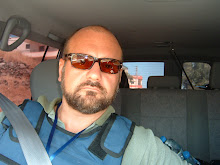
Puerto Cabezas is a small port area located on the north east Atlantic / Caribbean coastline, at about 560 km northeast of Managua. There are approximately 27,000 inhabitants of Bilwi. In the municipality of Puerto Cabezas there are 51 Miskito (indigenous) communities which combine with Bilwi's population for a total of 51,000 inhabitants. The city is surrounded by several rivers and lagoons. The official languages of the region are Spanish, Miskitu, Sumo, and English. Spanish is predominately spoken however there is a very large segment of the population who speak Miskito. In all communities, Miskito is by far the predominant language. During the two days trip spent in the Puerto Cabezas area, one entire day has been dedicated to the river route along Coco River. This mission has been conducted to assess the condition of navigation and the quality of boats rented by the Organization. The itinerary travelled was Waspam – Sih Ba by boat (8 hour navigation time). In the above picture, Rio Coco and local communities. Author visiting the Sih Ba Miskito community, reachable only by boat
The threat: The main threat in the region is related to the moderate concentration of common criminals while the Mara (gangs) phenomenon is less evident in Puerto Cabezas than in the inner areas. The operations conducted by boat present a high risk due to the river conditions and the large quantity of obstacles and debris floating in the river. The threat level in and around the Puerto Cabezas is assessed as follows:
Road Safety: The conditions of the roads to reach the communities around the Puerto Cabezas town, up to Waspan (along Coco River) and in the inner region are very poor, not paved but kept in decent conditions. Due to the scarcity of vehicles, the risk of accidents by road travel is assessed as low.
Communications: Communications in such complex geographical environment are essential. The four means of communications (MOSS compliant) that must be installed and functional are:
VHF radio set
HF radio set
cellular phone (ideally with different SIM cards in order to maximize the use of the coverage)
satellite phone
In this particular case a fifth communication means was deemed necessary in order to coordinate field work with local communities and improve the emergency respond. In fact, the great majority of the Miskito communities, assisted by the Organization, were using an HF “radio amateur” set which was working with different frequencies. In this case it would be useful to have a proper radio or, infringing the internal rules and agreement with government which assigned to the Organization dedicated frequencies (not recommended), change frequencies on the HF Codan radio apparatus supplied. Such measure can be considered as “preventive” since can be implemented in case of emergency to share security information gained on the ground.
SAT telephones: There are several models of sat phones available with different features but some older models, even if technically better built, cannot be suitable for the complex environment like the one analyzed here. In particular the sat phone evaluated in this office location was a Nera model. The Nera sat phone functions well in some circumstances (mainly as a static fixed point communicator). There are however several significant operational problems with its use in the field. It is of the type with a “laptop” type antenna which requires to be pointed directly at the satellite it is trying to communicate with. Any deviation from this line of contact will terminate the communications. This makes it difficult to use on the move. The system is not quick or easy to set up and would be difficult to use in an emergency. The system is not discreet and has caused problems in the past when used in front of naturally suspicious rebels or armed groups at checkpoints. In some cases the groups do not know what it is and this can lead to increased tension. I indeed recommend: · the use of satellite phone system with a hand held satellite phone for the reasons outlined above. Iridium now has such a product available. · Every field location should have at least a ready-to-use sat phone handy (SIM card must be placed properly, contract should not be expired, sat must be charged and charger (home/car adaptor) should be always carried with the phone. · Phones must be transported in proper water-proof bags suitable for boat operations and emergencies.
In the next post I will write about security while operating boats. Puerto Cabezas (Nicaragua) along with Quidbo (Colombia) and Puerto Lempira (Honduras) are all locations which I assessed and currently use boats to carry out their daily duties. So that it is important to understand the security rules and the technical features of the vessels prior any navigation.
NERA Satellite phone with lap top style anntenna. Not recommended for at-risk environment.
Iridium 9555, very efficient sat phone and descreet desing.
My name is Generoso (Gene) and I write Risk Security Assessment to stimulate a debate about international security related issues. I started Risk Security Assessment to share my long security field experience in different international contexts (Central/South America, Middle East, Central/East Africa, South Asia) with professionals who have same background, International Organizations, private companies, NGOs or simply those interested about new security challenges.
Arguments focus on loss prevention, risk analysis, threat assessment, law enforcement, information/personal security, contingency/crisis planning, executive protection programs.
I have more than 18 years of military/private security consultancy experience in several countries including Italy, Lebanon, Syria, Colombia, Bolivia, Kenya, Sri Lanka.
As Strategic Adviser I planned, implemented/coordinated security ops collecting/analyzing info. Actually Deputy Director Emergency and Preparedness with New York State.
Please leave a comment, enjoy the blog! :)